Location
Prince George's County, MD · zone 7b
 Longview
What happens when a soggy patch of lawn becomes a working ecosystem.
Every heavy rain, the same low spot turned into a shallow lake for a day or two.
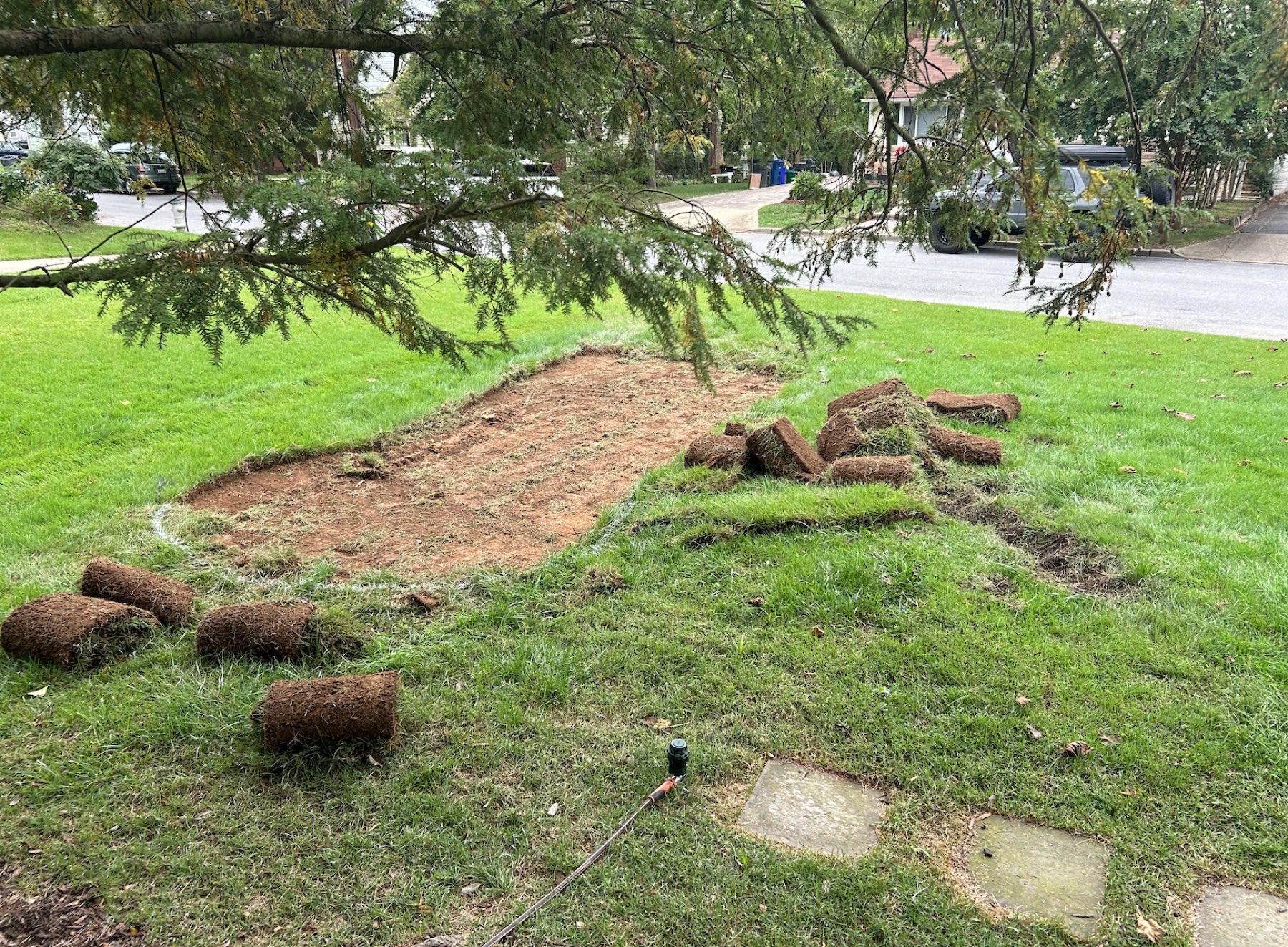
Two downspouts from the front of the house emptied directly onto a slight depression in the lawn. The grass was thin and patchy from constant wet-feet, the soil was compacted, and runoff from the roof was making its way to the street instead of soaking in. It was both a functional and an ecological problem.
The fix was a system designed to welcome the water — slow it down, spread it out, let it soak in — and turn the worst spot in the yard into the most interesting one.
I worked with Greensmiths — an excellent local landscape contractor — to redirect the two front downspouts underground with 4″ PVC, daylighting into the rain garden. From there, we excavated a shallow basin — roughly 18″ deep at the center — graded so water spreads laterally rather than ponding in one place. The soil at the basin floor was amended with compost to balance drainage with moisture retention. (Greensmiths is a great crew — happy to put anyone in touch.)
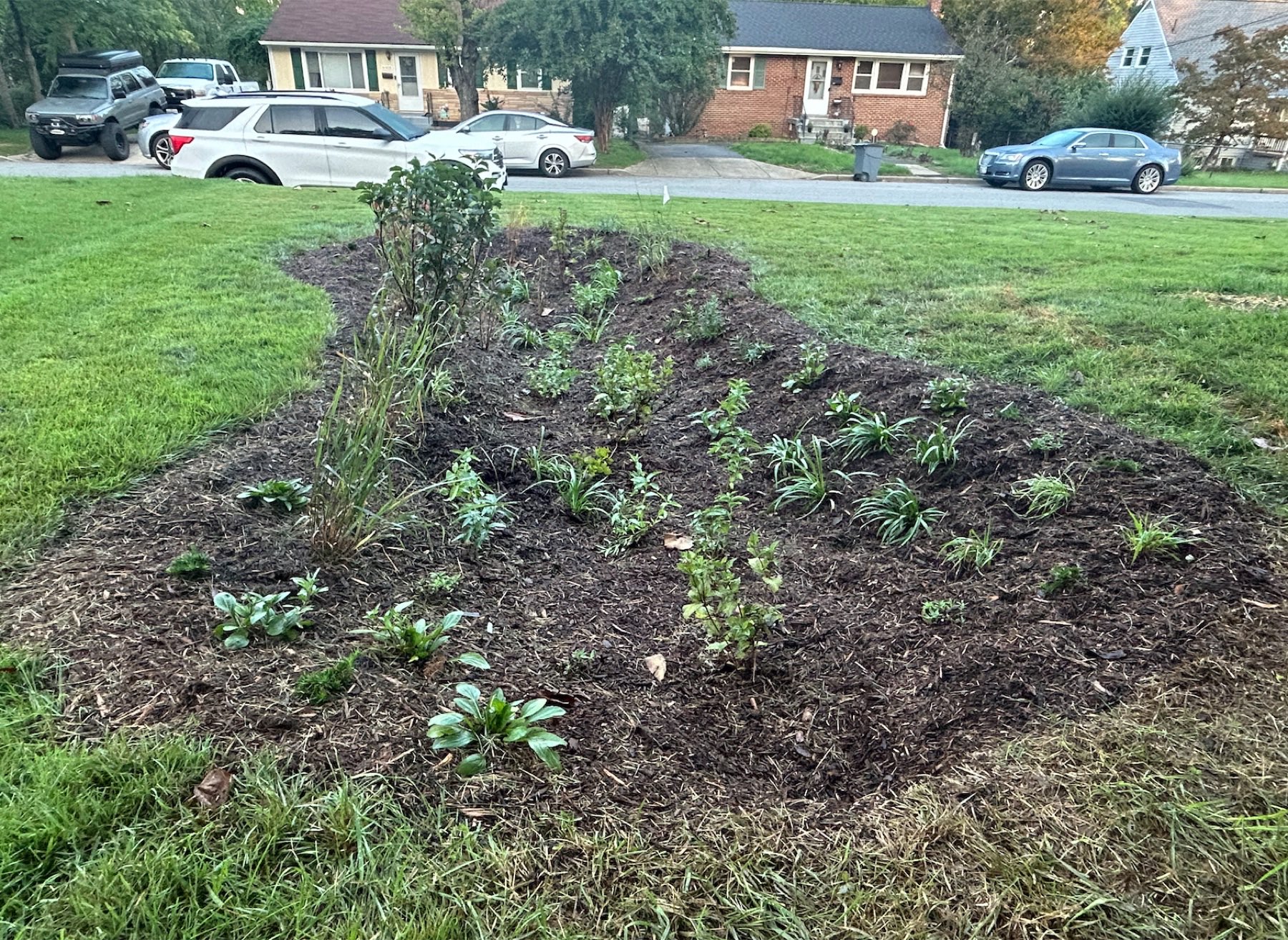
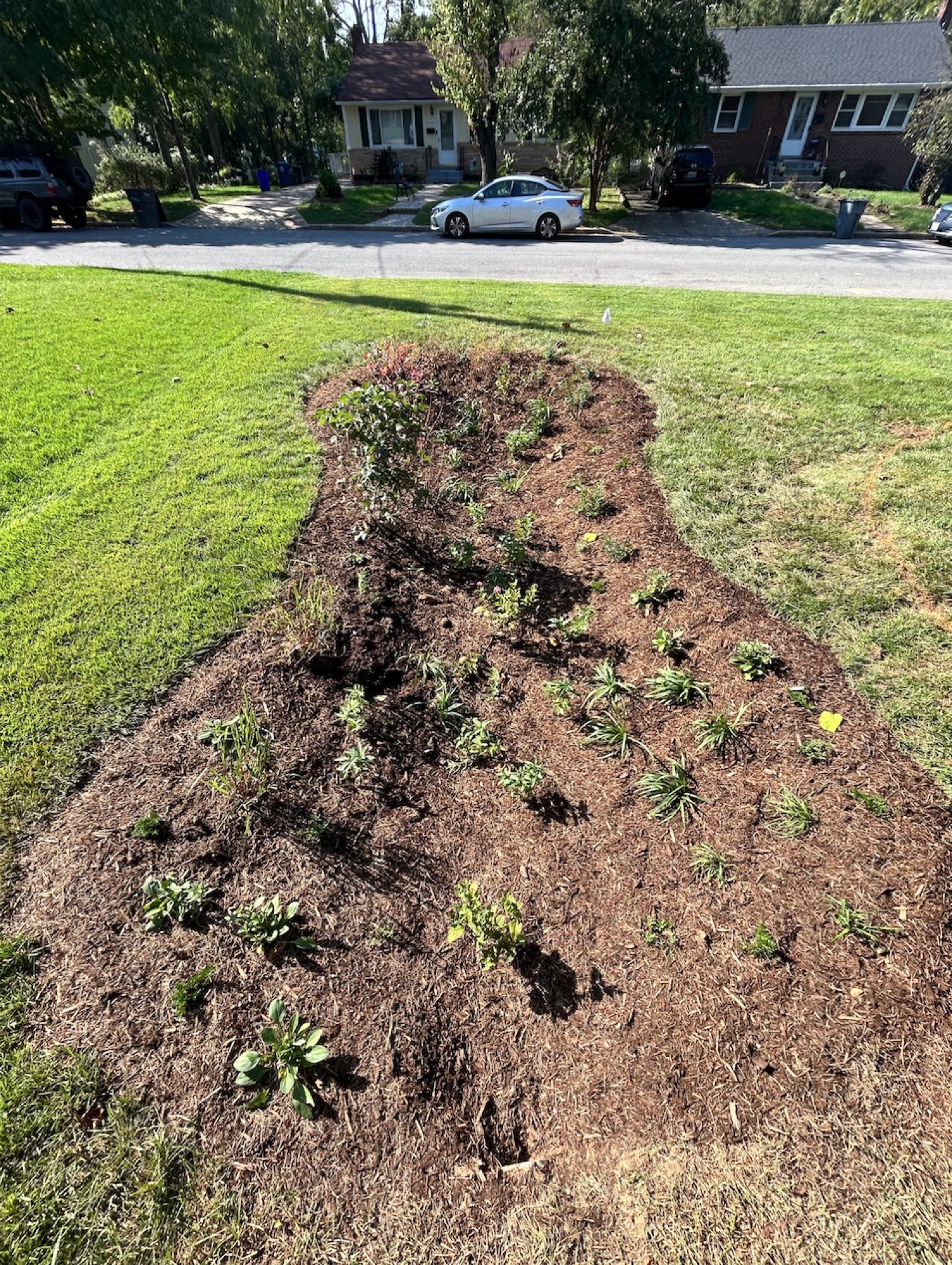
A few honest words about new native plantings: they look modest the day they go in the ground, especially if you use cost-efficient sized plants. Most of the energy is going underground — root systems that will never be visible but are doing the real work.
I chose plants with three jobs: tolerate intermittent flooding at the basin floor, fill in fast on the slopes, and provide year-round structure so the garden never looks empty between bloom periods. Most are Mid-Atlantic natives; all were purchased at small sizes and therefore lower cost.
The mulch is shredded hardwood, two inches deep — enough to suppress weeds, not so much that it acts like a dam during big rains.
This garden now handles our strongest storms and supports pollinators at the same time.
The plants have filled in. The basin holds water visibly during a storm and is dry a day or two later. No more standing water on the lawn. No more bare patches.
More quietly: it's become a small functioning habitat. Goldfinches eat the seedheads in fall. Bumblebees and butterflies find nectar and pollen throughout the year.
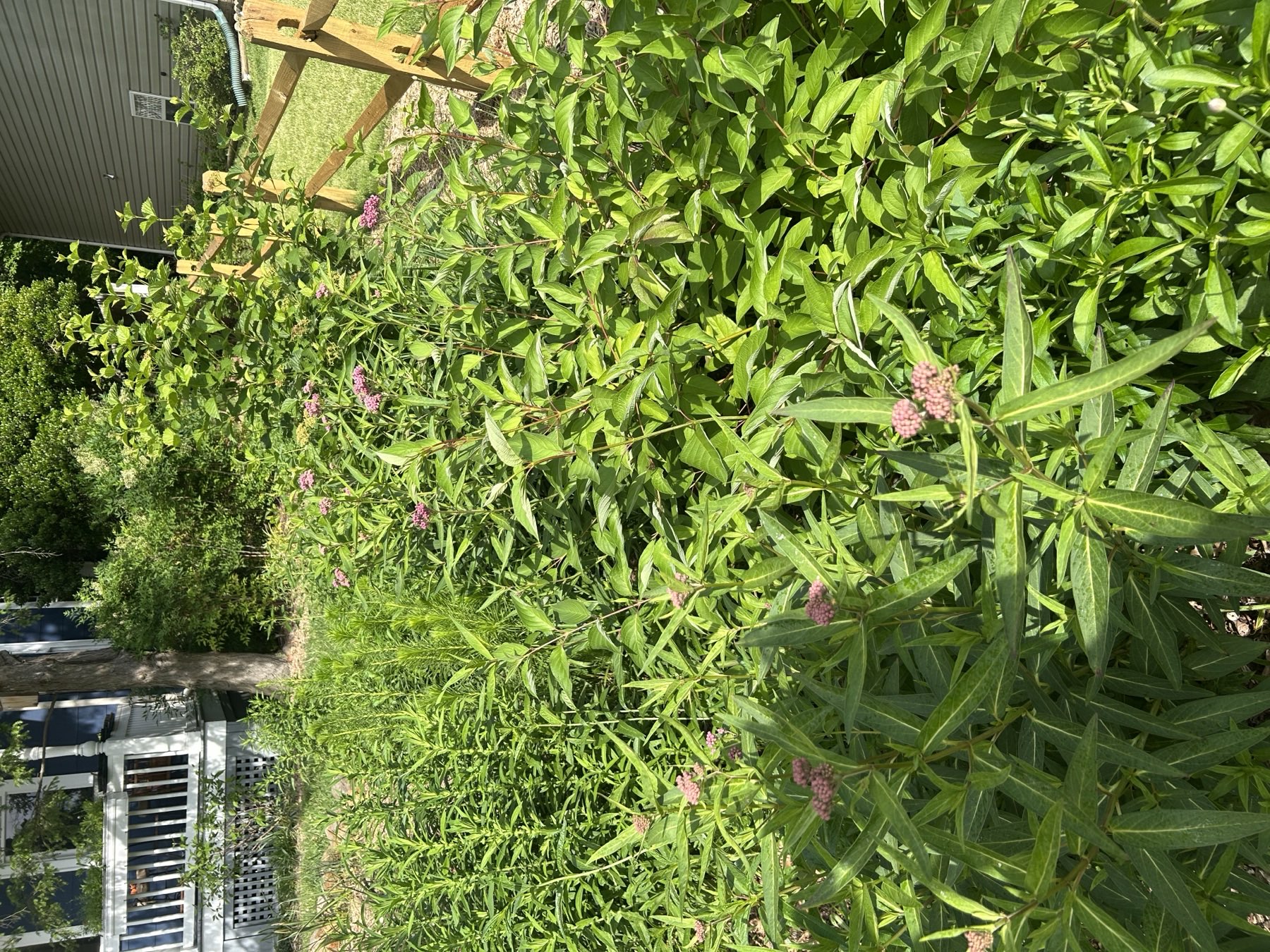
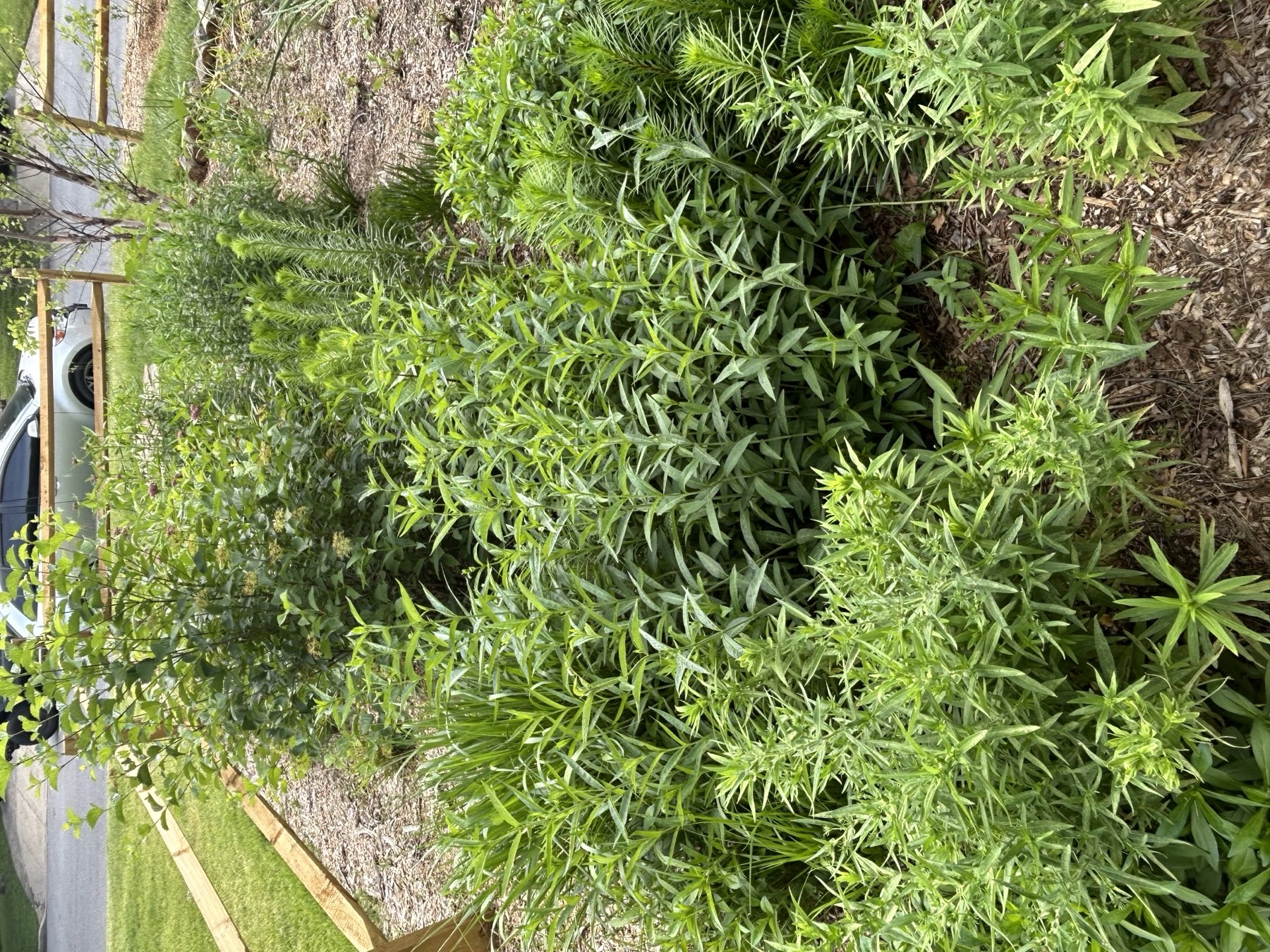
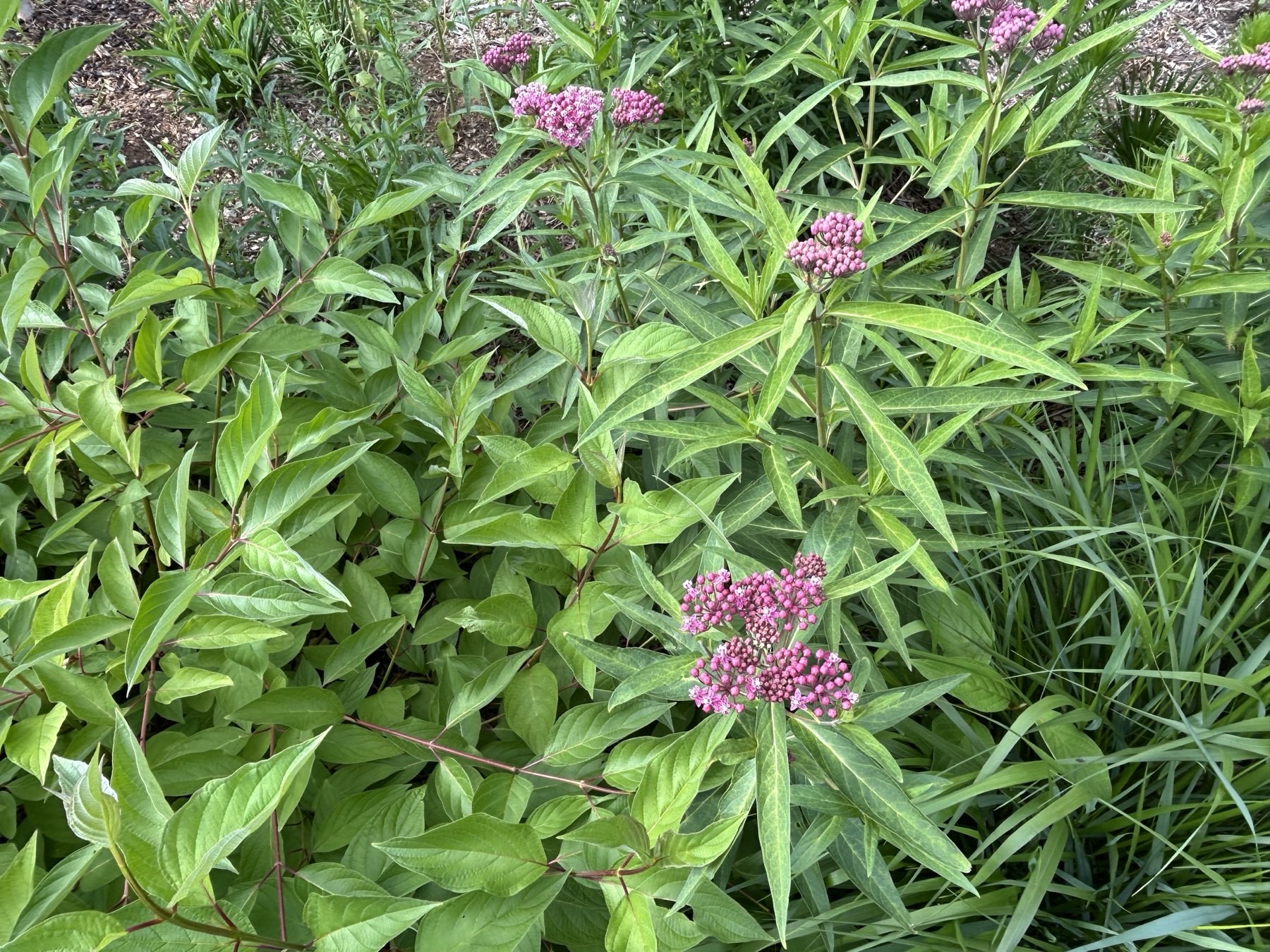
The bottom of the basin tolerates flooding, and the garden provides color every month of the year.